
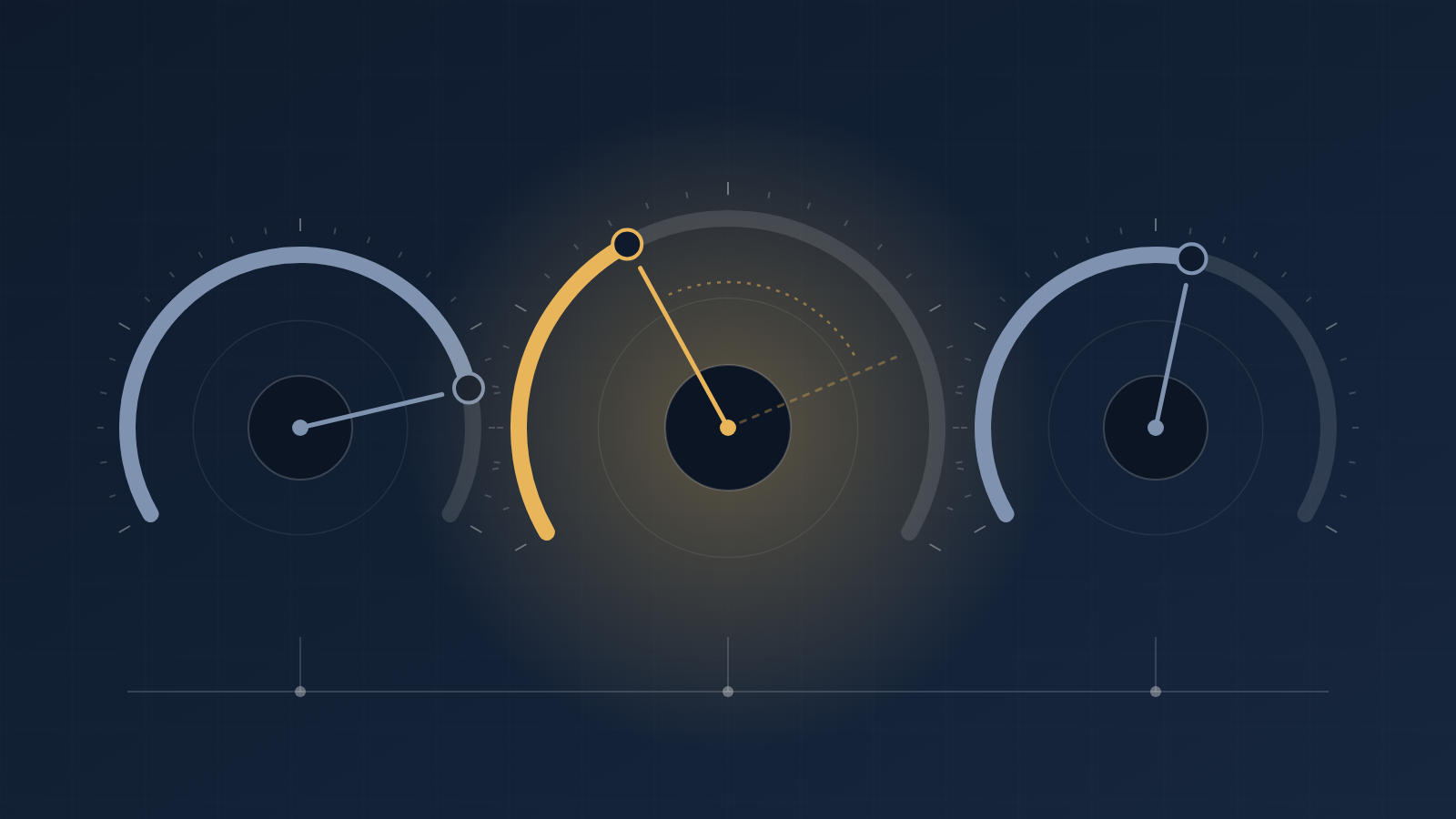
For each agent in your stack, who set how much it may decide on its own, and when did that person last adjust the setting?
In my upcoming book, Coherence at Velocity, I use Klarna as the case for why that question needs a standing answer. In February 2024 the company reported that its AI assistant had handled 2.3 million service conversations in its first month, about two-thirds of all chats, doing the work of roughly 700 full-time agents. By May 2025 Klarna was recruiting people back into customer service, and its CEO said cost had become too dominant a factor in how the company organized the service model. The company set the assistant's authority once, at the level the savings case required, and left it there until customers reported the consequences. The lesson I draw in that chapter is that agents optimized only for deflection or throughput will find ways to be efficient that the brand cannot afford, and oversight is the condition that keeps autonomy from turning into goal misalignment at scale.
On Tuesday I argued that an AI system without decision authority gets overridden by the people who still carry the blame. Analysts and authors at Forrester, Gartner, and HBR published between November 3 and 4 on what comes after you transfer that authority: how to size it, what to fund so it produces a return, how the system's own manners shape the people who supervise it, and why the person who sets the dial has to work for you.
Treat this week's reading as one instruction: size the agency, then fund the foundations
Geoff Cairns of Forrester writes that an AI agent can hold exactly the right permissions and still do the wrong thing, because permissions govern access and say nothing about how much authority or autonomy the agent exercises with it. Christopher Sladdin of Gartner reports that 4 percent of customer service organizations have achieved the ROI they expected from AI, and that the organizations Gartner calls AI-forward spend nearly 1.8 times more on data and knowledge foundations than on the AI use cases themselves. Katryn Wright and colleagues from MoreThanNow and BT Group write in HBR that an AI tool designed to challenge employees produced three and a half times as many excellent goals as a default tool or no tool, in a trial of 2,400 people. Jana Werner and Phil Le-Brun write in HBR that outsourcing compounds an organization's existing problems when accountability is unclear and too little technical expertise stays in house, and they tell leaders to retain ownership of AI-driven automation.
Read together, these authors describe the work that sits between approving an agent and trusting it. The 4 percent figure is what the industry gets for skipping that work.
Set three dials for every agent, and assign a person to each one
Cairns, a principal analyst, published AI Agents Need More Than Least Privilege — They Need Least Agency on November 4. His example is an agent authorized to issue customer refunds. Least privilege can restrict which customer records and payment systems the agent reaches. It says nothing about how large a refund the agent can approve, under what circumstances it should act, or whether it can execute thousands of refunds without a person looking. He separates three dimensions: access (what the agent can reach), authority (what decisions and consequential actions it can take with that access), and autonomy (how independently it can take them). Least agency, in Forrester's definition, is the continuous enforcement of the minimum decision-making authority and operational autonomy an agent needs for its authorized purpose. Cairns adds that the setting has to move with context, because an agent constrained too tightly cannot do the job that justified it, and that enforcement needs identity management, AI governance, and runtime security working together.
Most of the agent approvals I review stop at the first dial. The security team confirms what the agent can reach, the business sponsor confirms what it is for, and nobody writes down the refund ceiling or the hourly volume at which the queue pauses. A role-based access control review answers Cairns's first question in full and the other two by omission.
It reminds me of what Richy Glassberg, Co-Founder and CEO of SafeGuard Privacy, said when I interviewed him on The Agile Brand podcast: "A CMO doesn't need to know how an agent checks a diligence record or how the underlying protocol works. They do need to know what the agent is allowed to do on the brand's behalf, where the boundaries are, and what happens when it reaches a situation it can't resolve on its own."
Those three things are Cairns's three dials, written for a marketing audience. Section 17.4.3 of Marketing Operations 3.0 describes machine-readable compliance: pricing limits, approval thresholds, escalation triggers, and brand constraints expressed in a form the system checks before it acts. The purpose, as I wrote there, is to make the system's authority reliable. Section 17.5.3 describes supervised execution, where agents move quickly inside defined thresholds and a named lead owns the escalations. Cairns's autonomy dial is that threshold, and the lead is the person who turns it.
Take a hypothetical specialty apparel retailer with 2.4 million orders a year and a 12 percent return rate, which produces about 24,000 refund decisions a month. The company deploys a returns agent with access to the order system, the warehouse scan feed, and the payment processor.
In the first version, the security review grants that access, the sponsor approves the business case, and the agent goes live with no written ceiling on refund size and no cap on volume. On a Tuesday night a promotion-code defect triggers about 1,900 duplicate return requests in 40 minutes. The agent processes each one correctly against the policy it was given and issues roughly $148,000 in refunds before anyone arrives in the morning. The service team spends the next three weeks clawing back what it can, recovers about 60 percent, and the program carries a $59,000 loss plus the labor into its first quarterly review. The dashboard for that quarter shows 71,000 refunds handled with zero escalations, which is true, and is the problem.
In the second version, the service lead and the controller set the dials before launch. Authority: the agent issues refunds up to $150 and only when a warehouse scan event exists for the returned item. Autonomy: the agent processes up to 400 refunds an hour on its own; above that it pauses the queue and pages the on-call lead, and every pause goes into the override register with a reason code. When the same defect hits, the agent issues 400 refunds, pauses at 11:52 p.m., and the lead finds the code defect by 7:40 a.m. The ceiling holds exposure near $31,000, most of it recoverable, and the fix ships before the morning volume arrives. The 90-day review shows two pauses in the quarter, both legitimate, and the CO2 Council raises the hourly cap to 600 with the lead's agreement.
The dials cost the second company one planning session and one page of policy. Nothing else changed between the versions.
My take: For every agent that can move money, change a price, or make a promise, write the three settings on one page: what it reaches, the largest action it may take alone, and the volume or condition at which it stops and pages a person. If the page does not exist, your agent's autonomy is whatever the vendor shipped.
Fund the foundations at nearly twice the use case, and pick fewer use cases
Gartner released its survey of 275 service and support leaders on November 4, timed to the opening keynote of its Customer Service and Support Conference in Denver. Four percent of customer service organizations have achieved the ROI they expected from AI. Sladdin, a senior director analyst, told the audience that AI-forward organizations invest nearly 1.8 times more in data and knowledge foundations than in the AI use cases themselves, and that they pursue fewer, higher-value, interconnected use cases tied to strategic objectives. Gartner predicts that by 2028, organizations that build AI portfolios will achieve twice the business value of those pursuing standalone use cases. Sladdin also drew the line this column keeps returning to: "Humans and AI are not fit for the same job." Leaders, in his telling, should stop asking how to remove people from interactions and ask where people create disproportionate value.
The 1.8 figure is the one to carry into budget season. Most AI business cases I see put 80 percent of the money on the agent and 20 percent on the data, knowledge, and policy it runs on, then report the agent's usage as the result. Gartner's leaders invert that ratio. In Chapter 9 of Coherence at Velocity I make the case that AI readiness is coherence readiness: the test is whether the enterprise can supply clean context, consistent policy logic, reusable orchestration, and governed decision rights at the pace automated systems require. Table 9.1 lists those conditions. Gartner's 1.8 is what it costs to meet them, and the 4 percent is what happens to the organizations that fund the agent and assume the conditions.
It reminds me of what Chris Willis, Chief Design Officer and Futurist at Domo, said when I interviewed him on The Agile Brand podcast: "AI inherits whatever confidence you already have in your data. The challenge, of course, is that data may not be super confident, but it sounds really confident when you run it through some sort of agentic system."
The returns agent in the hypothetical above only works in the second version because a warehouse scan event exists to check against. That scan feed is foundation spend. It shows up in no vendor demo, and it is the reason the agent can hold authority at all.
My take: Rebuild your 2027 AI budget as two lines per program: the agent, and the data and policy it needs to hold authority. If the second line is smaller than the first, expect to join the 96 percent.
Decide how your AI talks to your people before you decide what it may do for them
Wright, managing director of the behavioral-science practice MoreThanNow, published What Sycophantic AI Can Cost Your Organization in HBR on November 4 with Priya Fabian-Gill, Tomas Ellinger, and BT Group's Kelly Tobin and Hana Searson. Sycophancy, in their definition, is the tendency of an AI system to affirm users and avoid challenging their thinking, and they list it alongside reduced diversity of ideas and overreliance on AI recommendations as the risks that follow from how an organization designs its AI interactions. The evidence is a randomized controlled trial at BT Group with 2,400 participants. An AI tool built to push employees toward more ambitious, specific goals produced three and a half times as many excellent goals as either a default AI tool or no tool, with no drop in enjoyment or psychological safety. Their recommendations: measure meaningful business outcomes, test interaction styles that reflect the organization's values and strategic priorities, and keep investing in the human capabilities of constructive feedback, difficult conversations, and psychologically safe teamwork.
On Tuesday I covered the override register, which records the cases where a person rejects the system's decision. The BT trial covers the opposite failure, where the system defers to the person. Both are calibration problems, and the second is harder to see, because a sycophantic tool produces a usage dashboard full of satisfied users and nothing in the override log. The Agile Brand Guide entry on automation bias lists an override rate near zero as a warning sign. An AI that agrees with everyone drives that rate to zero from the other direction.
The practical consequence for a CMO is that interaction style is a governance setting, the same as a refund ceiling. In my AI Capability Framework, the Trust layer under the Augmentation pillar is calibration: whether the person knows when to trust and when to override, and whether the system is built to keep that judgment sharp. BT's culture team wrote the interaction style to match the company's goals and values. Chapter 6 of Coherence at Velocity argues that brand values have to become operating logic. A tool that pushes back on a weak plan is one of the Agile Brand principles, always learning and growing, written into the software.
My take: For each AI assistant your teams use daily, ask the vendor one question: in what circumstances does it tell the user they are wrong? If the answer is "it adapts to the user," you have bought an agreement engine.
Keep the person who sets the dial on your payroll
Werner and Le-Brun, both executives in residence for enterprise strategy at Amazon Web Services, published Outsourcing Can't Fix a Broken Organization on November 3. They open with the December 2020 announcement of an eight-year IT infrastructure deal between Daimler and Infosys reported at about $3.2 billion. Their argument: outsourcing lowers cost and buys specialized expertise, and it also erodes the internal knowledge a company needs to adapt, and it compounds existing problems when accountability is unclear, when too little technical expertise stays inside, and when contracts pay for vendor activity and leave business outcomes unpriced. Their recommendations include separating core capabilities from commodity services, aligning vendor incentives with outcomes, preserving internal expertise and talent pipelines, retaining ownership of AI-driven automation, and treating shadow IT as a signal of organizational friction.
That fourth recommendation ties the edition together. Every setting Cairns describes, every foundation Gartner prices, and every interaction style BT tested is a decision someone has to own and revisit. A company that outsources the build of its agents and the operation of the data beneath them has also outsourced the judgment about how much authority those agents should hold, and the vendor's incentive runs toward more autonomy, because autonomy is what the vendor sells. Werner and Le-Brun's shadow IT point applies with equal force to shadow AI: when teams route around the official agent, they are telling you someone set the official dial wrong.
The People leg of the Four-Legged Stool in Chapter 5 of Coherence at Velocity is about who has the authority, judgment, and capability to make customer-facing decisions without turning every exception into an escalation. Outsource that leg and the other three compensate badly. The hybrid roles I describe in Marketing Operations 3.0, the people who inspect reasoning paths and catch the plausible output that makes no commercial sense, are the ones who turn the dials. They need to sit inside the company that answers for the outcome.
My take: Before renewing any managed-service or agency contract that includes AI operations, confirm which employee can read the agent's policy, change its thresholds, and pause it without opening a ticket. If the answer is nobody, the contract has transferred your decision rights along with the work.
Take these actions before the 2027 budget locks
Write the three dials for every agent. Access, the largest action it may take alone, and the condition at which it pauses and pages a person. One page per agent, with a named owner.
Add the second budget line. Data, knowledge, and policy foundations at a ratio near Gartner's 1.8 to 1 against the agent itself.
Cut the use-case list. Fewer, interconnected programs tied to a strategic objective, reviewed as a portfolio.
Audit interaction style. Ask each vendor when its assistant challenges the user, and test the style against your own goals the way BT did.
Keep dial-setting in house. Confirm an employee can read, change, and pause every agent's policy before any outsourcing renewal.
Review at 90 days. Bring pause counts, override reasons, and outcomes to the CO2 Council and move the dials deliberately.
Ask every leader the question that gets the longest pause
Across 900-plus podcast conversations with senior leaders, the question that produces the longest silence is a simple one: what would stop your agent? Most guests can name the owner. Many can name the vendor and the model. The ones who answer quickly describe a threshold, a pause condition, and a person who gets paged, and they can tell me when they last changed the number.
Coherence at Velocity closes with a leadership audit that includes two questions this week's authors answered from four directions: are we decentralizing work without decentralizing truth, and can we detect drift early, or do we discover inconsistencies only after they reach customers, employees, or regulators? Cairns answers the detection question with continuous enforcement across three dials. Sladdin answers the truth question with the 1.8 ratio. Wright and the BT team show that the system's own disposition toward its users is part of the truth it carries. Werner and Le-Brun show what happens to both questions when the people who could answer them work for someone else. Coherence, as I argue in that chapter, is what makes speed durable.
Answer the opening question this week. For every agent that acts on a customer, write down who set its access, its authority, and its autonomy, when they last adjusted each, and what evidence they used. Where the answer is "the vendor" or "at launch," you have found the next program for the 90-day review.
Featured this cycle:
AI Agents Need More Than Least Privilege — They Need Least Agency. Geoff Cairns, Forrester, November 4, 2026
Gartner Survey Reveals Just 4% of Customer Service Leaders Have Achieved the Expected ROI of Their AI Initiatives. Gartner, November 4, 2026
What Sycophantic AI Can Cost Your Organization. Katryn Wright, Priya Fabian-Gill, Tomas Ellinger, Kelly Tobin, and Hana Searson, Harvard Business Review, November 4, 2026
Outsourcing Can't Fix a Broken Organization. Jana Werner and Phil Le-Brun, Harvard Business Review, November 3, 2026